
How to Choose Art for Your Home Without Feeling Intimidated
“I don’t know anything about art.”
Clients often say this before we have even begun talking about it.
They may have a couple of pieces they love but no idea how to add to them. They may have spent years looking at blank walls because buying something original feels like a decision they ought to understand better. Galleries can feel intimidating. Prices are not always obvious. Even the language around art can make people feel as though they have arrived halfway through a conversation everyone else already understands.
Then there is the fear of getting it wrong.
The good news is that you don’t need an art education to know when something moves you.
You are allowed simply to like it. Or love it.
That instinct is where I begin.
You don’t need to know the right words
I trained in Fine Art before studying at the Glasgow School of Art, so looking at art has always been a natural part of how I understand an interior. Composition. Colour. Scale. Tension. The feeling created by one form sitting beside another.
But I never expect a client to arrive with that vocabulary.
Some clients feel completely at ease talking about art. They know the artists they follow, the galleries they enjoy and the kinds of work that hold their attention.
Others become more overwhelmed the more questions I ask.
Do you prefer abstract or figurative work? Portraits or photography? Painting, printmaking, watercolour or mixed media? Do you want something quiet or something with real presence?
Questions can help us narrow the field. But if they begin to feel like a test, I change the approach.
We look instead.
I show the client a carefully edited selection and watch what draws them in. What they pass over. What they return to. Sometimes the response is immediate. Sometimes it takes time.
There is no correct reaction to have and no need to explain it perfectly.
Liking something is a very good start
People sometimes worry that simply loving a piece is not a sophisticated enough reason to buy it.
It is probably the best reason.
Art lives with you differently from most other things in a room. You may look at the same work every day for years. It should hold something for you—curiosity, calm, energy, memory or even a feeling you cannot quite name.
That response matters more than whether the artist is fashionable or the work resembles something you have seen repeatedly online.
My role isn’t to tell a client what they should like. It is to help them trust what they already respond to, then put enough knowledge around that instinct for the decision to work within the home.
That is where scale, placement, framing and the relationship with the rest of the room come in.
Art doesn’t have to match the cushions
One of the most limiting ideas about choosing art is that it should match the interior.
It doesn’t.
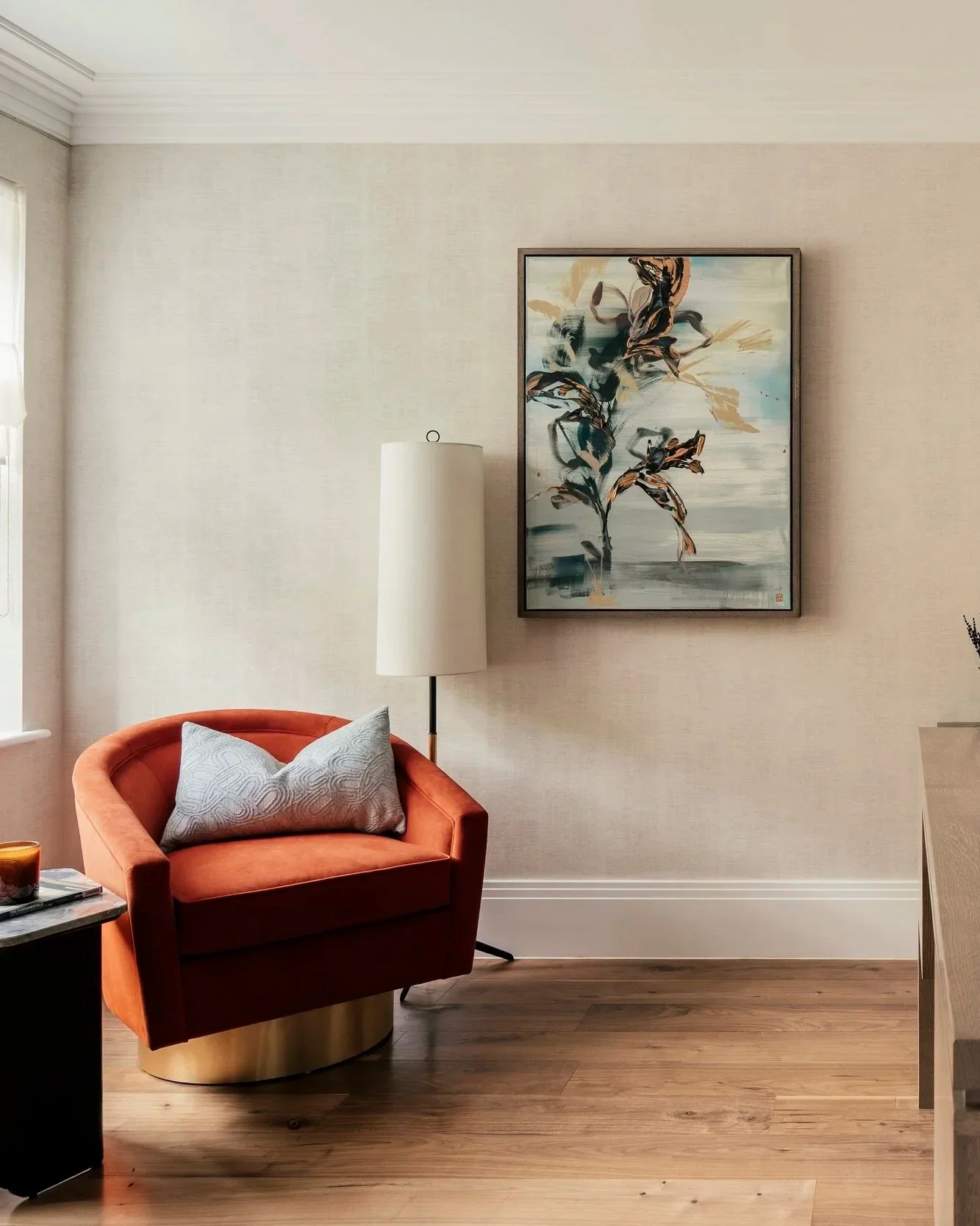
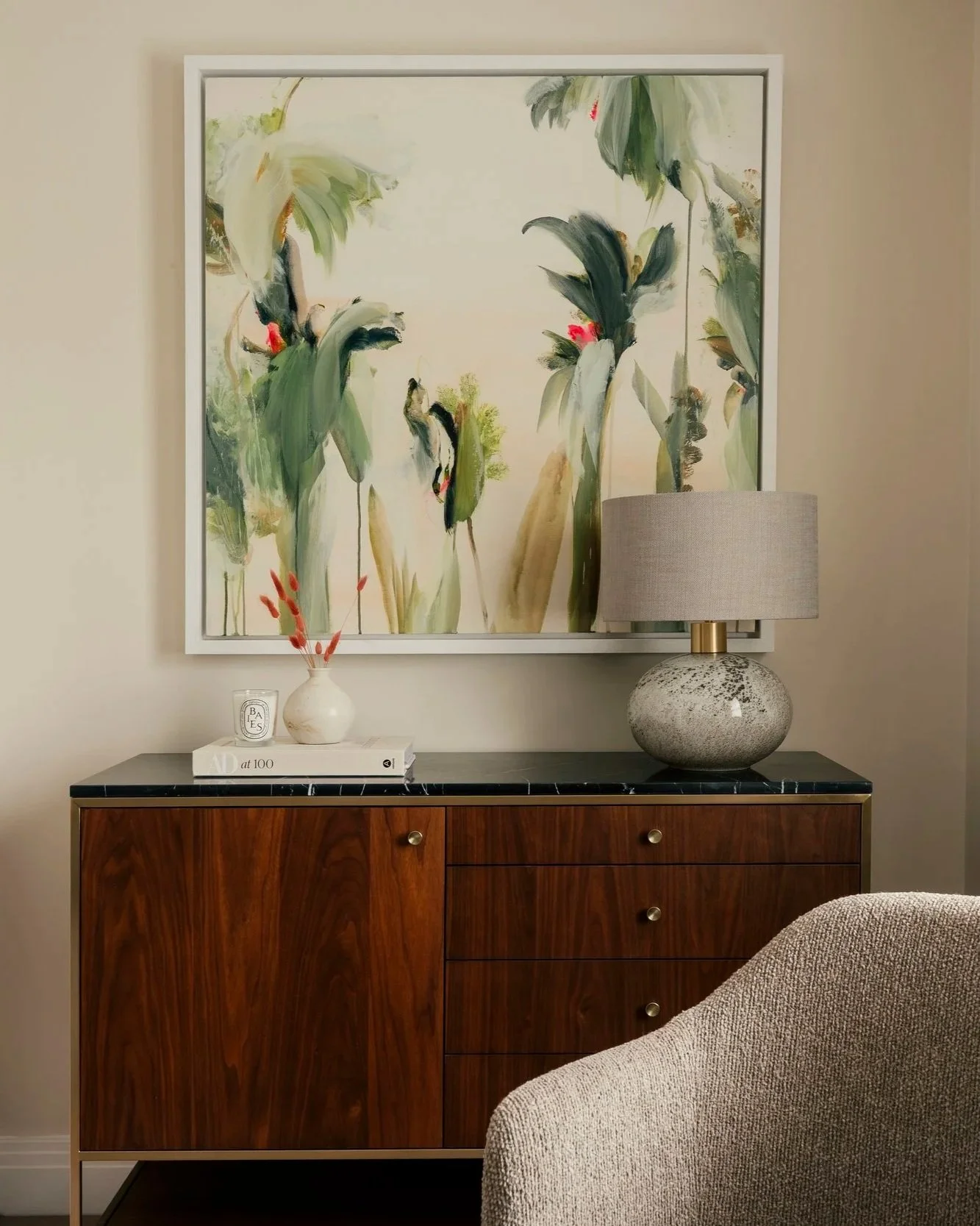
Art can sit in contrast with a room. A contemporary abstract work can give energy to traditional architecture. A small, quiet drawing can be more powerful than a large colourful canvas if it is given the right space. Photography, painting, prints and inherited pieces can all live together without sharing the same style.
What matters is the relationship between them.
Colour can provide a connection, but it is only one possibility. The link might instead come through scale, rhythm, subject, material or mood. Sometimes the most interesting choice is the one that interrupts the room slightly rather than disappearing neatly into it.
A home should feel collected, not colour-matched.
Scale changes everything
Clients often fall in love with a piece in isolation. Then they bring it home and discover that it feels lost above a large sofa, crowded into a narrow wall or strangely disconnected from everything around it.
The artwork is not necessarily wrong. The scale or placement may be.
Before sourcing anything, I look at the wall and the room as a whole. The architecture. The furniture beneath it. The distance from which the work will usually be seen. Whether it needs to hold a large space or reward somebody standing close.
One substantial work might give the room the confidence it needs. Elsewhere, a group of smaller pieces may create a more personal and layered composition.
Framing also changes the way art occupies a room. A frame can give a delicate work more presence, connect an older piece to a contemporary interior or allow very different styles to sit comfortably together. It shouldn’t be an afterthought.
These decisions are often what separate a piece somebody loves from a piece that also feels completely at home.
Sometimes the art comes first
Art is often treated as the final layer. Something to fill the walls once the furniture, colour and lighting have all been decided.
Sometimes it should be the first.
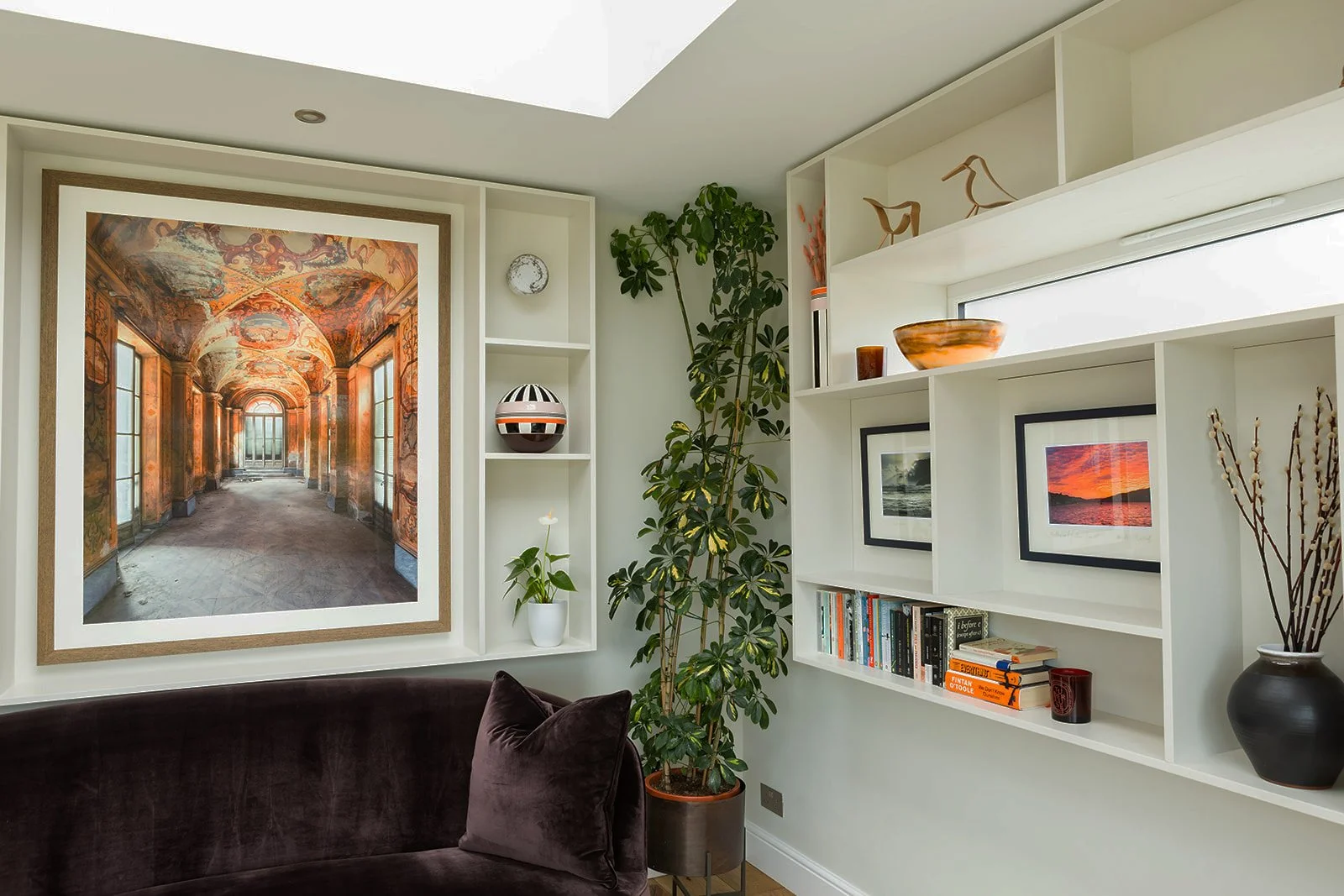
I worked with a client who had a large family artwork for each of their two lounges. They were heirlooms and deeply important to them. There was no question that the works would stay.
Rather than design both rooms and try to incorporate the art afterwards, I used each piece as the foundation for its room.
The scale of the artworks informed the furniture and the balance of the walls around them. Their colourways gave me a point of departure for the wider palettes—not by matching every shade, but by understanding which tones could support the work and which contrasts would bring it to life.
The resulting rooms were different, but connected by the same principle. The art wasn’t decoration added at the end. It was part of the architecture of each scheme.
More importantly, the rooms began with something the family already loved.
Original art exists at many price points
Another source of intimidation is price.
Galleries do not always make costs easy to understand, and clients can assume that buying original work automatically means entering a very expensive market.
It can. But it doesn’t have to.
Original drawings, prints, photography and work by emerging artists can be accessible. A collection can include investment pieces alongside modest finds, inherited works, children’s drawings and objects with personal meaning.
Value isn’t created by making every piece expensive. It comes from choosing with intention.
I regularly visit galleries, exhibitions and art fairs to find artists for current and future projects. I also source work directly and present clients with an edited selection at an appropriate scale and budget.
That edit matters. The art world is enormous. The client doesn’t need to see all of it. They need to see enough of the right work to recognise what has a hold on them.
Adding to what you already have
Starting a collection doesn’t mean beginning from nothing.
The two pieces you already own may tell us a great deal—even if they are completely different from one another. We can look at why you chose them, what you still love about them and how they might sit alongside something new.
There is no requirement to commit to one artist, medium or period. In fact, homes are often richer when the collection develops gradually and includes different kinds of work.
The thread is you.
It might be a recurring attraction to strong colour, the human figure, unusual materials or work that creates stillness. Often that thread only becomes visible after we place several instinctive reactions beside one another.
Then the next decision feels less daunting.
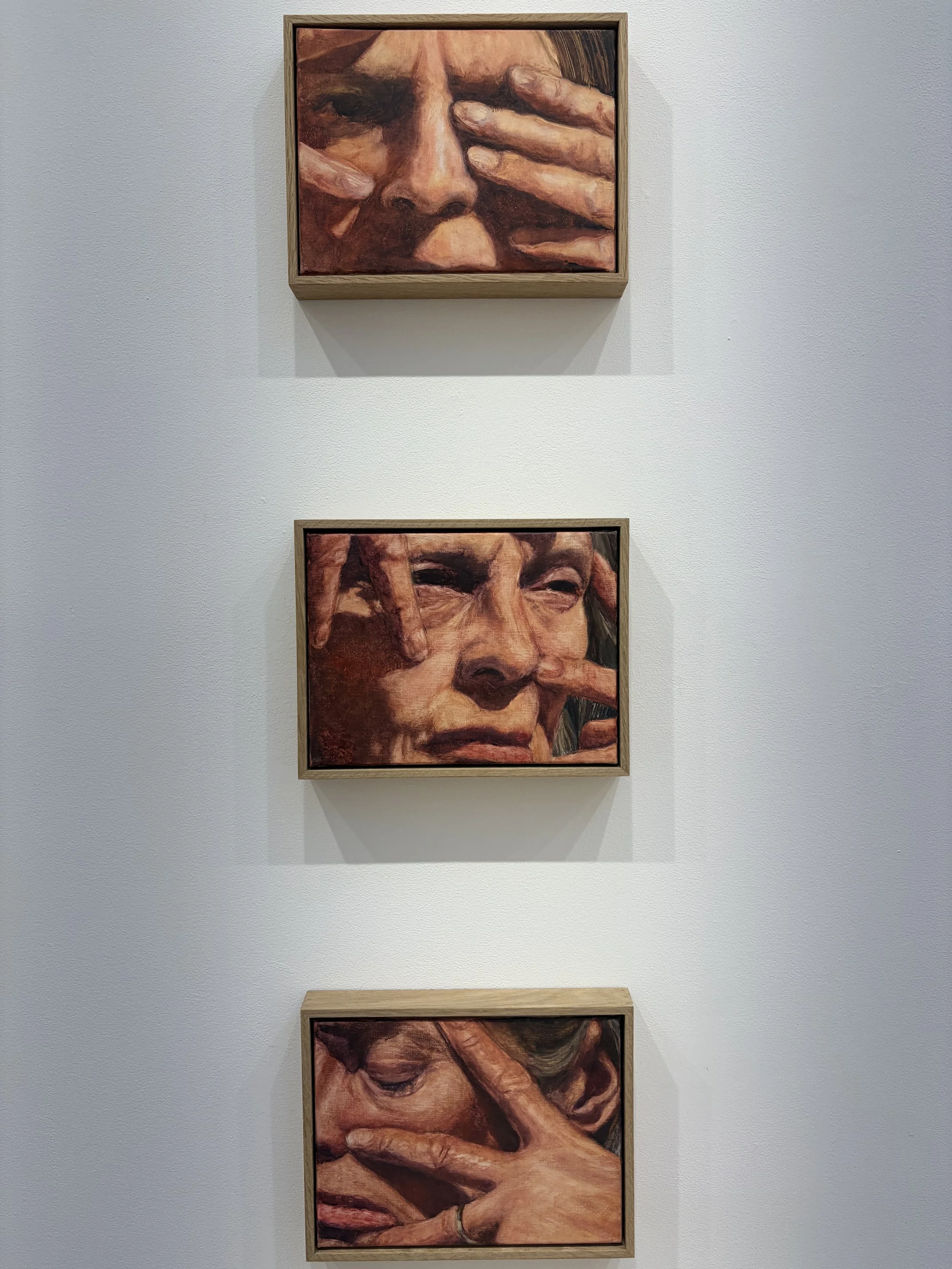
Jess Allen Many Selves - ‘Vestiges’ at Annely Juda Fine Art
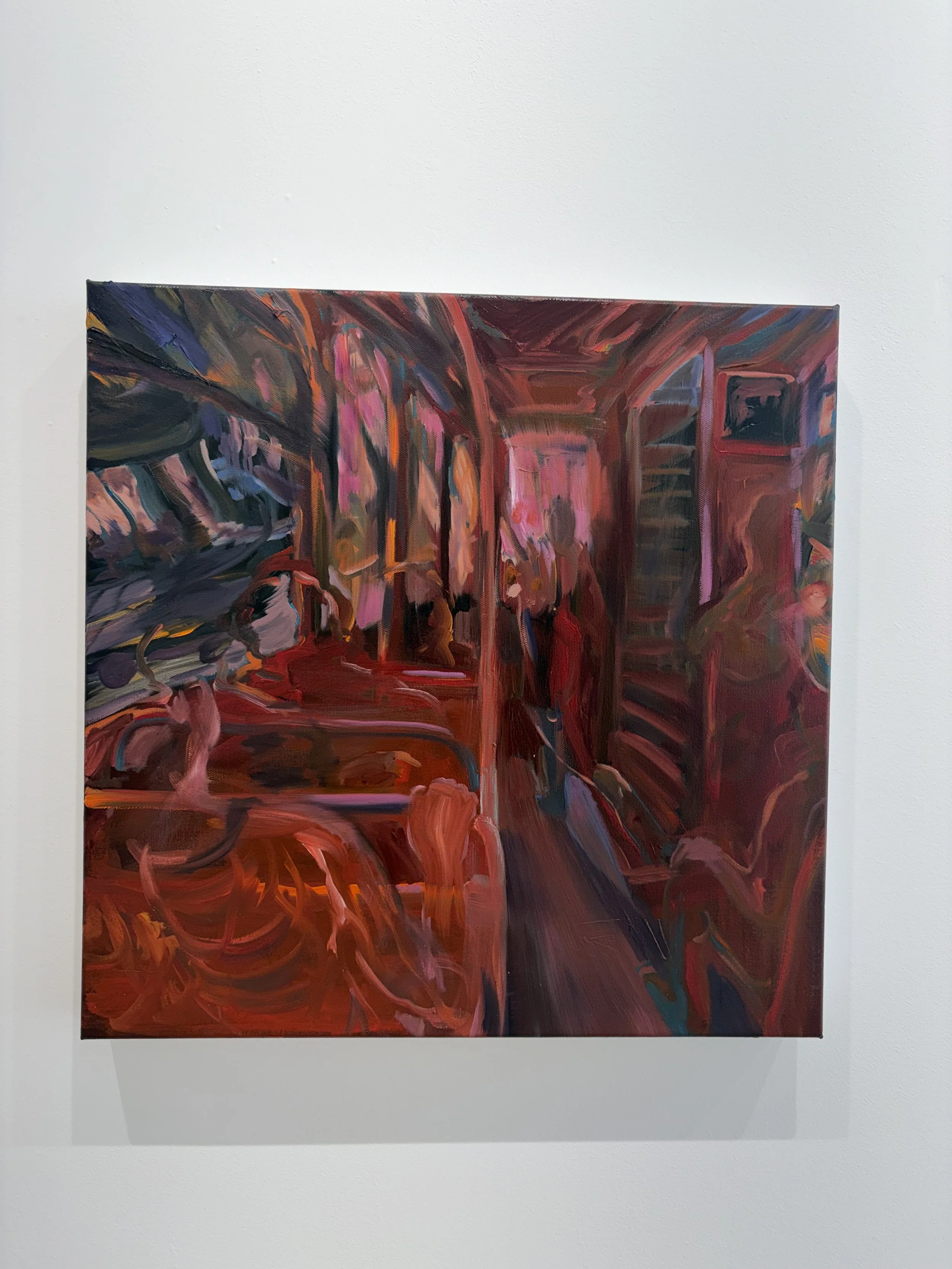
Laura Footes Night Bus Hackney Road - ‘Vestiges’ at Annely Juda Fine Art
You are allowed to begin with love
Buying art doesn’t require you to become an expert first.
You don’t need to know every movement, medium or gallery. You don’t need to justify why one piece speaks to you and another doesn’t. And you certainly don’t need to fill every wall at once.
Begin with the response.
Then consider the room. The scale. The frame. The placement. What the work will sit beside and how you want to feel when you see it every day.
That combination—instinct supported by considered decisions—is what makes art feel personal rather than intimidating.
You are allowed simply to love a piece.
The rest can be worked out.
If you would love to introduce original art into your home but don’t know where to begin, get in touch to start the conversation.